Home Ancient Persia Reading Guide

History & fiction · A reading guide

Historical Fiction Set in Ancient Persia

A reader’s guide to empires, viewpoints, and stories.

Looking for historical novels about ancient Persia? Start with two questions: which period interests you, and whose experience do you want to follow? A Persian diplomat, a captive in Alexander’s world, and a Roman commander on the eastern frontier lead into very different kinds of fiction.

This guide brings together books set within the Persian world and stories shaped by its encounters with Greece and Rome. It separates the historical periods, explains what each selection offers, and introduces the Rome-and-Parthia setting of the Lost in the Wind saga.

A quick way to choose

For ideas and diplomacy, consider Creation. For an intimate Persian perspective on Alexander, look at The Persian Boy. For a Roman frontier siege, start with Fire in the East.

First, find your period

Ancient Persia is more than one setting.

“Ancient Persia” is a useful starting point for a book search, but it covers different dynasties and centuries. The world of Xerxes is not the world of Rome’s Parthian rivals. A novel’s date can tell you more about its setting than a palace or a crown on its cover.

Three major Iranian empires: a simplified reading guide
Period Dates Useful context for readers
Achaemenid c. 550–330 BCE The empire of Cyrus, Darius, and Xerxes. Its encounters with the Greek world and its conquest by Alexander belong to this setting.
Parthian 247 BCE–224 CE An Iranian empire ruled by the Arsacid dynasty. Its rivalry with Rome provides the wider historical context for Rome-and-Parthia fiction.
Sasanian 224–651 CE The dynasty that replaced Parthian rule. Stories of third-century Roman campaigns against Sasanian Persia belong to this later world.

Between the Achaemenid and Parthian settings came Alexander’s conquests and the rule of his successors, including the Seleucids. These periods overlap during political transitions; the table is a guide, not a complete chronology.

Historical background: Getty’s guide to ancient Iran , The Met on the Parthian Empire , and The Met on the Sasanian Empire .

Three different ways into the world

Historical novels to consider.

These selections offer different viewpoints rather than a ranking. Some travel far beyond Persia; one approaches it from the Roman frontier. The summaries describe each novel’s premise, with publisher links for further details and available editions.

Creation

Gore Vidal

Achaemenid world · Fifth century BCE
Diplomacy, travel, and philosophy

Vidal’s novel follows Cyrus Spitama, a Persian diplomat whose recollections connect the court of the Persian kings with Greece, India, and China. Political experience sits alongside questions about belief and the origins of the universe.

Consider it if: you want a Persian-connected viewpoint and a story that moves between cultures and ideas. Its premise makes it a different choice from a novel focused mainly on battles or a single romance.

Explore Creation at Penguin Random House →
The Persian Boy

Mary Renault

Alexander’s world · Fourth century BCE
Captivity, intimacy, and conquest

Renault approaches Alexander through Bagoas, a Persian youth taken into slavery who becomes his lover. The novel’s perspective brings personal vulnerability into a story of conquest, court tensions, and military power.

Consider it if: you are drawn to the relationship between private affection and public authority. It offers an intimate route into Alexander’s world, rather than a survey of the Persian Empire. Its premise includes enslavement and sexual violence.

Explore The Persian Boy at Penguin Random House →

Fire in the East

Harry Sidebottom

Roman–Sasanian frontier · 255 CE
Book I of Warrior of Rome

Ballista is sent to prepare the Roman stronghold of Arete for an approaching Sasanian attack. The premise centres on defence, military leadership, and the pressure of an expected siege.

Consider it if: you want warfare on Rome’s eastern frontier. This is a Roman-side entry into the encounter with Persia, not a novel centred on everyday life within Iran. Its Sasanian setting is also later than the Parthian world.

Explore Fire in the East at Penguin →

Look beyond the setting on the cover.

Read a sample before choosing. Notice who tells the story, how much space goes to relationships or military action, and whether the author explains departures from the historical record. Two books about “ancient Persia” may offer completely different reading experiences.

From this site’s author · Peyman Golkar

A Parthian life caught between two worlds.

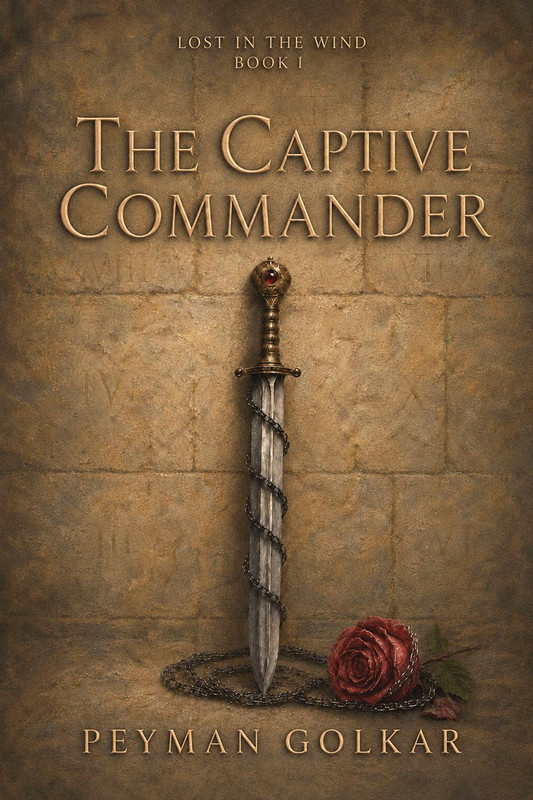
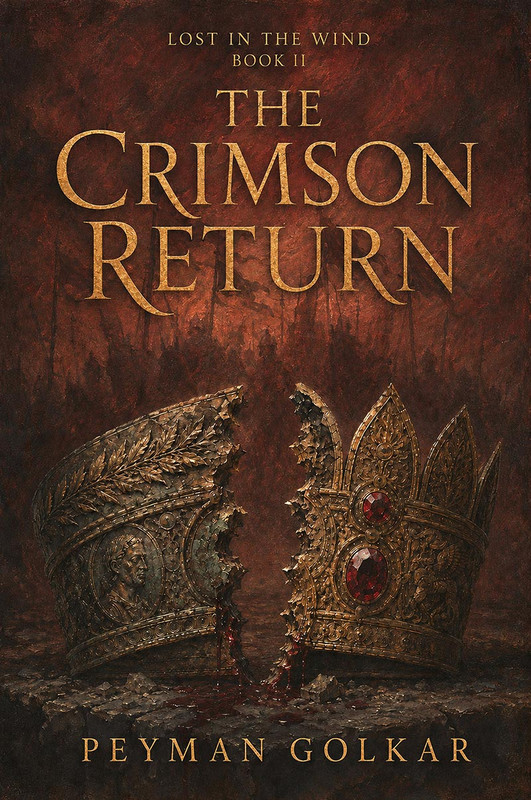
If captivity, divided loyalties, and forbidden love are what draw you to ancient-world fiction, Lost in the Wind follows a Parthian commander whose defeat takes him into a Roman household.

Begin with The Captive Commander. Sold into Constantia’s service, Surena faces the loss of freedom and status while navigating a relationship shaped by unequal power. The setting is largely Roman, but the central character’s homeland and identity lie on the other side of the frontier.

The Crimson Return continues the story as Surena returns to Parthia. Military responsibility and court rivalry widen the conflict, while his attachment to Constantia keeps Rome at the centre of his personal struggle.

The saga takes creative liberties with ancient history. Its Surena is a fictional protagonist, not a biographical portrayal of the historical general associated with the Battle of Carrhae. English and Persian editions are available.

Before you choose your next book

Questions readers often ask.

Are Persia and Parthia the same thing?

Not exactly. In broad discussions of ancient Iran, “Persia” may cover several historical settings. Parthia identifies a particular region and the empire ruled by the Arsacid dynasty. For choosing fiction, distinguish the Parthian period from both Achaemenid and Sasanian settings.

Which book offers a Persian viewpoint?

Creation follows a Persian diplomat, while The Persian Boy approaches Alexander through Bagoas. Both offer Persian-connected perspectives, but they concern different periods and different kinds of experience. Neither should be treated as the voice of an entire civilisation.

Where should I start with Rome and Persia?

For a military story on the Roman–Sasanian frontier, consider Fire in the East. For a fictional Parthian protagonist, captivity in Rome, and a relationship-driven saga, explore The Captive Commander . These books differ in period, viewpoint, and their approach to history.

Are these novels set entirely in present-day Iran?

No. This guide includes novels about Persian people, imperial encounters, and neighbouring frontiers. Their journeys and settings can extend beyond present-day Iran. Check the individual descriptions if a story located mainly within Iran is your priority.

Can historical fiction teach me ancient history?

It can provide questions to explore and make a period feel more approachable. Dialogue, motives, relationships, and even major events may still be invented or altered. Read an author’s historical note where available, and use independent historical sources to check events that interest you.

Sources & further reading

Museum resources support the historical overview. Publisher descriptions support the novel summaries. The reading suggestions group books by premise and viewpoint, rather than rank their historical accuracy.

Interested in Peyman Golkar’s fiction? Join the reader list for book news and updates on the next volume of Lost in the Wind.

Join the reader list →